Leventis Municipal Museum
- 10 окт. 2017 г.
- 3 мин. чтения
After Αρχιεπισκοπή (gr. Archbishop's Palace) I walked on my foot through all of Nicosia to get reach to the Leventis Municipal Museum. Are you ready to come in with me?
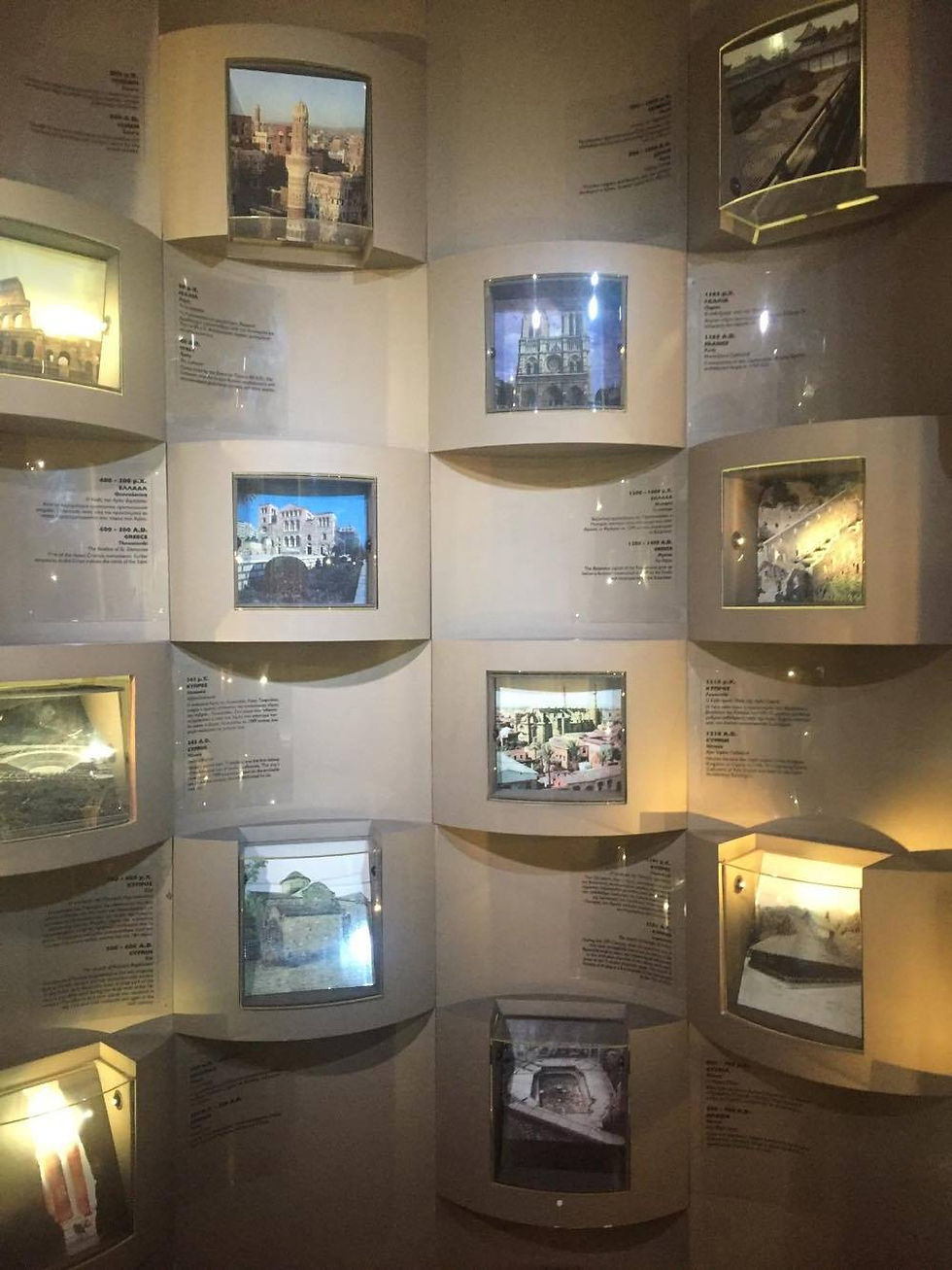
New Media on the first floor
The collection of the famous Cypriot banker A. G. Leventis was later formed into A. G. Leventis Foundation, which distributed the exhibits to several museums along the islands (A. G. Leventis Gallery, Leventis Municipal Museum and Archaeological Museum). On the ground floor, the exhibition is built on a chronological basis, revealing the history of Cyprus and the influence of cultures that subsequently invaded and later influenced the spirit and trends of the Greeks.

Plate, Venetian Rule, 16th century
The history of the island can be easily remembered by the stages of the invasions, namely: 1️⃣ Frankish and Venetian Rule (1192-1571). 2️⃣ Turkish Invasion (1570-1878). 3️⃣ British Rule (1878-1960).
In this post you can look through and get acquainted with a variety of ceramics of Cyprus made in the 14th century. I bought a book on this subject in the museum with research papers written by various scientists (Cyprus, England, Turkey and by the way Crimea (!)). So, in that digest I have read that the main burning point in Cyprus for the production of this glazed pottery was Paphos (which is located in the Western part of the island on the coast). 📝 And now, we, as art historians, can recall the well-known Italian Amarorii (the so-called "lovers' bowls"), which looked like majolica decorative dishes in the form of plates with portraits of women with inscriptions such as "Casandra Bella", etc., in which they tried to emphasize both the clothes and the hairstyle of those women. And here is a very interesting situation: in the 14th century, the glazed pottery of Cyprus can be divided into several subsections: ➖ ceramics with solar and vegetable elements; ➖ ceramics with images of animals (usually birds); ➖ ceramics with the image of banquets; ➖ ceramics with twin images of lovers, whose bodies are painted under the same clothing (like a raincoat); ➖ ceramics with single figures. 🎨 The color palette is dominated by: yellow, green, beige and brown colours.






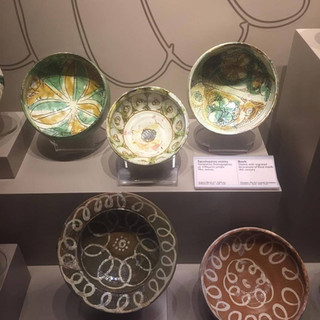


Bowls
Glazed, with engraved decorations of floral motif
14th century
In the halls dedicated to the history of the Ottoman invasion, there are a huge number of books, engravings and maps. There are also muskets, cold steel, decorative and applied arts.
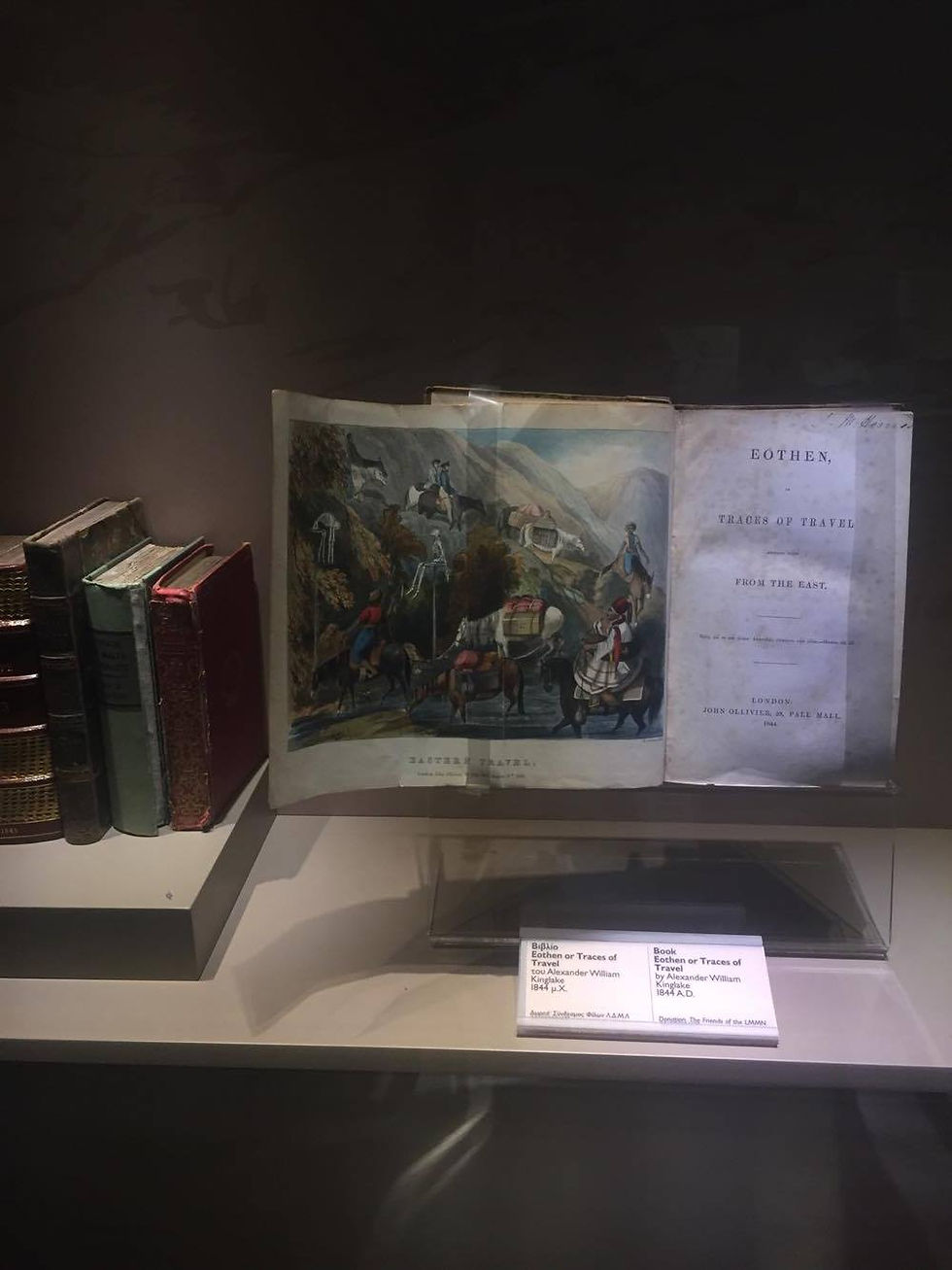
Book
Eothen or Traces of Travel
by Alexander William Kinglake
1844
Fasting for people who thought they knew or did not know what scientific research is. How it looks like in Cyprus. In the museum's collection there is a portrait of Catherine Cornaro (Venetian, who arrived in Cyprus for rule). And so museum researchers decided to conduct the detailed studies of the canvas in order to better understand the school, the time of creation (since many of Catherine Cornaro's portraits have survived. Take a look through the post, there you will see an animation selection). So, two halls are devoted exclusively to this study and one portrait. Two walls are equipped with shelves, which you can move by yourself and see photos of fluoroscopy of canvas, layers of paint, canvas and analysis of the pigments. Everything is painted up to trifles, in stages. On the opposite wall is mounted a screen where they show in turn all the portraits of Catherine Cornaro and as one flows into the other, focusing on the face. In the center, there is a modern installation, which shows the stages of painting's creation. Her portrait is placed in the second hall.





Research related to attribution of Catherine Cornaro's Portrait
Infographics and installation
The museum has all the amenities for visitors: an elevator for the disabled, a game room for children, coasters, branded name benches with the inscriptions Leventis Museum. A lot of infographics and modern media: touch-screens, etc.
P.S. I managed to take this picture at the entrance #iHaveThisThingWithFloors. I really liked the tiles. I had time to buy a couple of books. I'll show you soon. Entrance at the museum is free by the way.
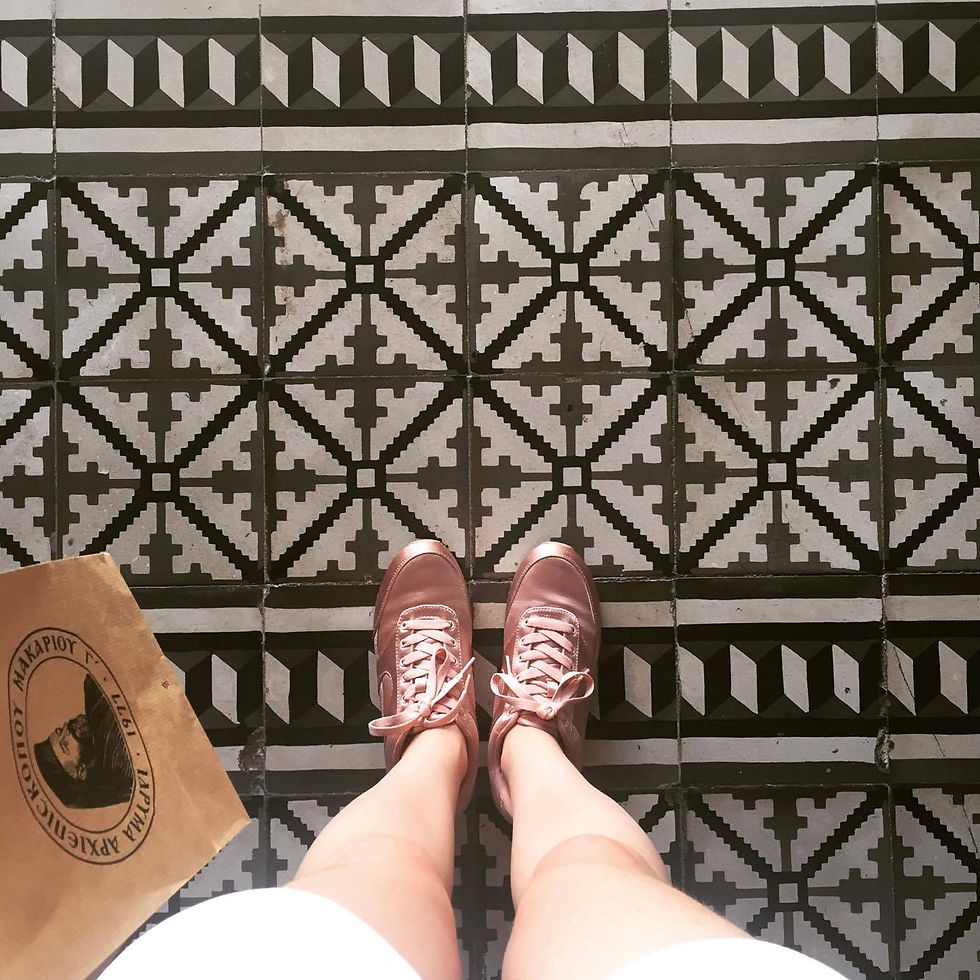
Tiles inside the museum near the entrance
Address: 15 -17 Hippocrates Str. Laiki Yitonia, 1500 Nicosia
P.O.Box 21015, 1500 Nicosia
Tel.: +357 22 661 475
Fax: +357 22 662 285
E-mail: info@leventismuseum.org.cy
Museum Website: http://leventismuseum.org.cy/home
Visiting hours:
Tuesday – Sunday: 10:00 -16:30
Closed on Mondays and all public holidays
Office Hours:
Monday – Friday: 7:45 – 15:15
- Closed on all public holidays
- The Museum will be closed from 24 - 26 December 2017, 1 and 6 January 2018


Комментарии